Beyond the Map: How Deer Park's Transit Position Quietly Shapes Property Value and Daily Life
Toronto is a city of neighbourhoods, and within that mosaic, location is rarely as simple as a postal code or a walk score. The distance between a front door and a subway entrance, between a residential street and a major arterial corridor, can translate into hours reclaimed each week, reduced transportation costs, and — critically for property owners — sustained demand from future buyers who place those same conveniences at the top of their lists.
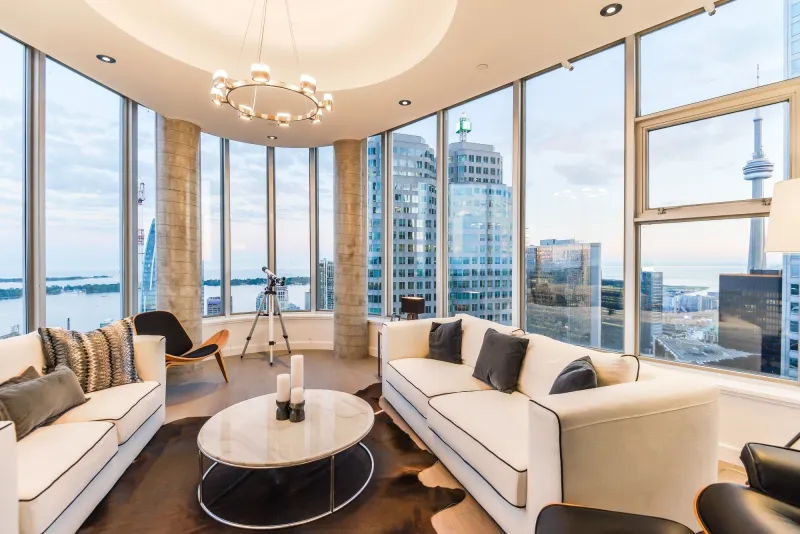
For residents of 1 Deer Park Crescent, Unit 803, the geography of daily movement is not an afterthought. It is, in many respects, one of the suite's most quietly compelling attributes.
The Bloor Street Axis: A Corridor That Connects Everything
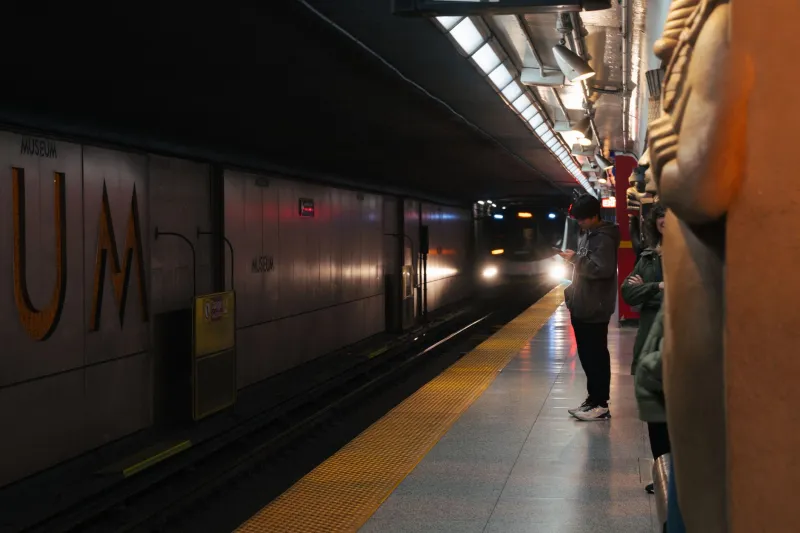
Bloor Street West is one of Toronto's most consequential transit and commercial arteries, and Deer Park's relationship to it is intimate without being intrusive. The neighbourhood sits just north of the Bloor-Danforth subway line — specifically within reach of both Spadina and St. Clair stations — placing residents at the intersection of two of the TTC's most heavily serviced routes.
This positioning matters in ways that go beyond simple convenience. The Bloor-Danforth line runs east-west across the city's core, offering direct access to Bay Street's financial district to the east and the creative and technology employment clusters of the west end. Meanwhile, the Yonge-University line, accessible at Spadina or St. Clair, provides a north-south spine connecting Midtown directly to Union Station and the broader downtown employment corridor.
For professionals who divide their working week between office environments and remote arrangements, this dual access is not a luxury — it is a practical necessity that Deer Park delivers with minimal friction.
The Spadina Streetcar: Surface Transit as a Lifestyle Asset
Beyond the subway network, the Spadina streetcar route offers a surface transit option that connects Deer Park's southern boundary to the waterfront, passing through the University of Toronto campus, the Entertainment District, and ultimately the Harbourfront. This layered connectivity — subway above, streetcar below — gives residents a degree of transit redundancy that many Toronto neighbourhoods simply cannot offer.
For those who prefer a less subterranean commute, the streetcar provides a ground-level alternative that, on a clear morning, offers a genuinely pleasant route through some of the city's most architecturally varied streets. It is a small consideration, perhaps, but one that speaks to how Deer Park's transit environment accommodates different rhythms of urban life.
Commute Times in Context: What the Numbers Actually Mean
Statistics Canada's data on commute duration consistently identifies Toronto as one of Canada's most time-intensive cities for daily travel. The average Toronto commuter spends approximately 33 minutes each way — and that figure climbs considerably for those relying on surface roads or less connected transit nodes.
Residents of 1 Deer Park Crescent occupy a different position on that spectrum. Access to rapid transit within a short walk places the suite's occupants within 15 to 20 minutes of the downtown financial core by subway, and within similar reach of the hospital row along University Avenue — a significant draw for healthcare professionals employed at Mount Sinai, Toronto General, or Sick Kids.
For families considering school proximity alongside employment access, the neighbourhood's location also places several respected independent and public schools within reasonable distance, reducing the logistical complexity that often accompanies parenthood in a large urban centre.
The Hidden Calculus of Resale Value
Transit proximity has a well-documented relationship with property values in Canadian urban markets. Research from the Toronto Regional Real Estate Board and independent urban planning studies has repeatedly identified walkability and transit access as among the most durable value drivers in the residential market — more stable, in many cases, than interior finishes or building amenities that depreciate or date over time.
Deer Park's location within this transit network is not something that can be replicated by renovation. It is fixed, structural, and increasingly scarce as Toronto's urban fabric densifies and competition for well-connected residential addresses intensifies. A suite that offers both the tranquillity of a mature, tree-lined neighbourhood and the transit access of a central urban district occupies a genuinely uncommon position in the market.
For buyers approaching Unit 803 as a long-term investment, this geographic durability is worth examining with care. The suite's appeal to future purchasers — whether professionals, downsizers, or families — will rest in part on the same transit advantages that serve its current residents, advantages that are unlikely to diminish as the city continues to grow around them.
Residential Calm Within an Active Urban Framework
One of the more nuanced dimensions of Deer Park's transit advantage is what it does not impose on residents. Many Toronto neighbourhoods that offer comparable transit access do so at the cost of ambient noise, pedestrian density, and the general friction of proximity to major commercial corridors. Deer Park manages a different balance.
The neighbourhood's residential streets — lined with mature trees, heritage homes, and well-maintained mid-rise buildings — sit at a remove from the bustle of Yonge Street and the Bloor-Yorkville corridor, even as they remain connected to both. This buffer between accessibility and serenity is not accidental; it reflects the neighbourhood's long-established character as a place where Torontonians have chosen to live deliberately, rather than simply conveniently.
For residents of 1 Deer Park Crescent, that balance is embedded in the building's address. The commute to the city's employment hubs is measured in minutes. The sense of having arrived somewhere considered, quiet, and enduring is immediate.
A Position Worth Understanding
In a city where transit access is increasingly a determinant of both quality of life and property performance, the geography of Unit 803 at 1 Deer Park Crescent deserves to be examined on its own terms. This is not merely a suite with good transit nearby. It is a residence positioned at the confluence of several of Toronto's most consequential transportation corridors, within a neighbourhood that has maintained its residential integrity precisely because it has never needed to sacrifice character for connectivity.
For those navigating Toronto's complex real estate landscape, that distinction is worth more than it might first appear on a map.