Character Over Glass: How Deer Park's Established Identity Outperforms Downtown Toronto's Condo Towers as a Long-Term Investment
When Toronto buyers weigh the merits of a Deer Park residence against a shimmering downtown tower, the comparison rarely resolves as simply as price per square foot. Beneath the surface metrics lies a more compelling story about neighbourhood permanence, buyer psychology, and the enduring premium that character commands. Understanding these distinctions is essential for anyone seeking not merely a property, but a genuinely appreciating asset.
The Illusion of Newness
Downtown Toronto's glass-and-steel condominium corridor has expanded dramatically over the past two decades. From the Financial District through CityPlace and into the emerging waterfront precincts, new towers have multiplied at a pace that has fundamentally altered the city's skyline. For a certain segment of buyers, this newness carries its own appeal — fresh finishes, modern mechanical systems, and the psychological satisfaction of being the first occupant of a space.
Yet newness, as any seasoned real estate professional will observe, is a depreciating quality. The moment a building is occupied, it begins the slow journey toward becoming simply another condominium in an increasingly dense inventory pool. In neighbourhoods where supply continues to expand — and downtown Toronto's development pipeline remains substantial — the competitive pressure on individual units intensifies with each passing year. Resale values in these corridors are subject to the relentless arithmetic of oversupply.
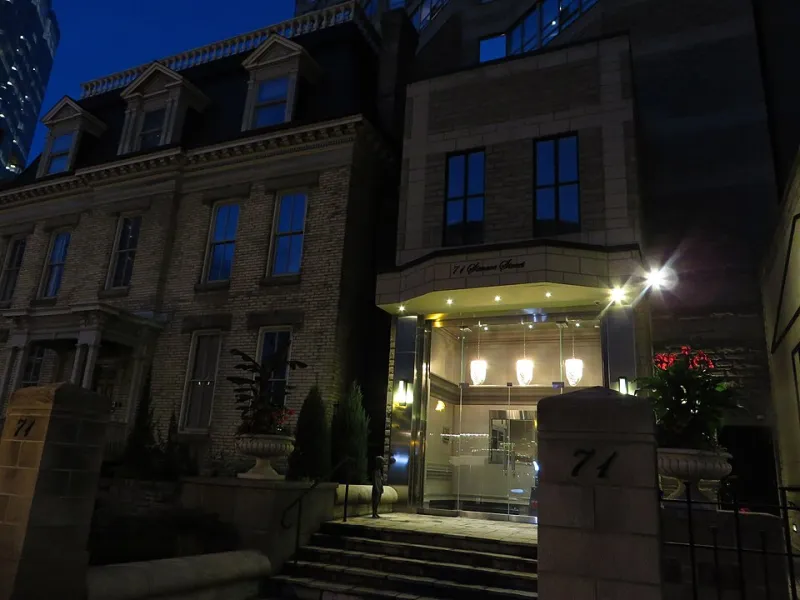
Deer Park operates under an entirely different set of conditions. The neighbourhood's built form is largely established. Victorian and Edwardian architecture lines the residential streets, heritage designations protect significant portions of the area's character, and zoning constraints limit the kind of dramatic intensification that has reshaped other Toronto precincts. Supply, in short, is finite. And finite supply, when paired with consistent demand, is the foundational condition for durable value growth.
What Buyers Are Actually Purchasing
The distinction between Deer Park and the downtown condo market is not merely physical — it is psychological, and buyer psychology is among the most reliable predictors of long-term price performance.
Research into residential purchasing behaviour consistently demonstrates that buyers in established urban neighbourhoods are motivated by a broader set of considerations than those purchasing in high-density new developments. In Deer Park, the acquisition of a residence carries with it access to a particular quality of daily life: mature tree canopy, quieter streets, proximity to the Beltline Trail, and a walkable village atmosphere centred on Yonge Street between St. Clair and Davisville. These are qualities that cannot be replicated by a developer, regardless of budget or ambition.
Buyers who prioritise these attributes tend to hold their properties longer, reducing turnover and contributing to neighbourhood stability. Lower turnover, in turn, reinforces the sense of community cohesion that makes an area desirable in the first place. It is a self-reinforcing dynamic that benefits every property owner within the catchment.
By contrast, the downtown condo market — particularly in buildings with significant investor ownership — experiences higher turnover rates and a more transactional relationship between residents and their surroundings. When investment conditions shift, these units enter the resale market in volume, creating temporary but significant downward pressure on valuations.
Walkability, Amenity Density, and the Infrastructure Premium
Toronto's Walk Score methodology assigns numerical values to neighbourhoods based on the proximity and variety of daily amenities accessible on foot. Deer Park consistently performs at or near the top of this metric for midtown Toronto, with residents able to reach grocery stores, independent restaurants, transit connections, and cultural institutions without relying on a vehicle.
This is not incidental to property values — it is central to them. As Toronto's population ages and generational preferences shift toward reduced car dependency, the premium attached to genuinely walkable addresses has grown measurably. The neighbourhood's access to the St. Clair and Davisville subway stations, combined with the local retail ecology along Yonge Street, positions Deer Park as a location that meets the practical requirements of daily life without compromise.
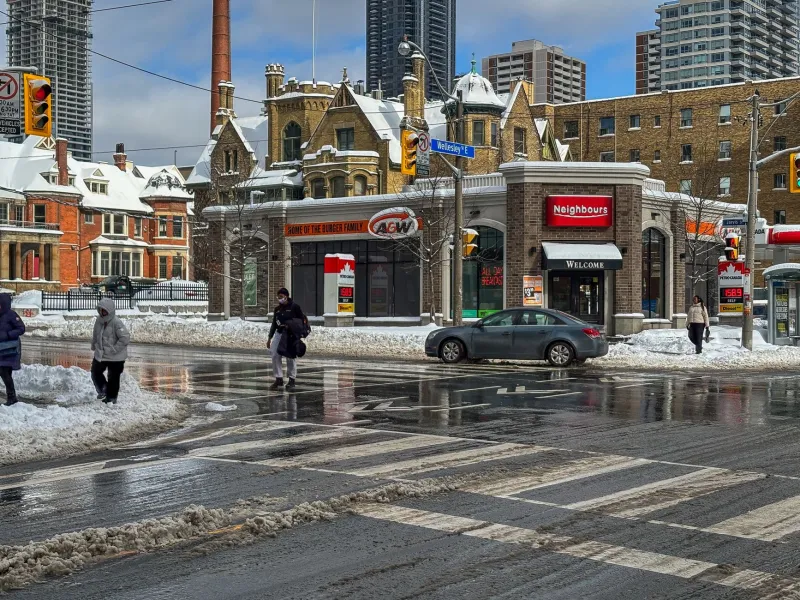
Downtown towers, while often proximate to transit, exist in environments that can feel transient or inhospitable to pedestrians — particularly in the colder months, when windswept plazas and construction-adjacent streetscapes diminish the appeal of street-level movement. Deer Park's human-scaled environment, sheltered by its tree canopy and defined by its low-rise commercial frontages, offers a qualitatively different pedestrian experience that buyers — and, crucially, appraisers — recognise.
Cultural Proximity as a Value Driver
Among the less frequently cited but genuinely significant contributors to Deer Park's investment case is its proximity to Toronto's cultural infrastructure. The Canadian Film Centre, the Rosedale Golf Club, the Bell Lightbox's programming orbit, and the network of private schools and institutions that define the broader midtown corridor all contribute to the neighbourhood's gravitational pull for a particular demographic.
This demographic — typically well-established professionals, downsizing homeowners from the surrounding Rosedale and Forest Hill districts, and internationally mobile buyers seeking a foothold in one of Canada's most stable real estate markets — brings with it both purchasing power and long-term commitment to place. Their presence sustains local retail quality, supports neighbourhood associations, and creates the kind of social fabric that sustains property values through market cycles.
The downtown condo market serves a different and more varied demographic mix, one that includes a higher proportion of short-term renters, student occupants, and speculative investors. None of these occupancy types is inherently problematic, but their collective presence tends to dilute the neighbourhood cohesion that underpins long-term value appreciation.
The Resale Conversation
For a prospective buyer at 1 Deer Park Crescent, Unit 803, the investment calculus is worth examining with clarity. The suite itself benefits from all of the neighbourhood-level advantages described above, while also offering the practical benefits of high-rise living — building amenities, professional management, and the security of a well-maintained structure within a mature residential setting.
When the time comes to resell — whether in five years or fifteen — the conversation with prospective buyers will be shaped by the enduring qualities of the address itself. Deer Park's reputation, its infrastructure, its aesthetic coherence, and its demographic consistency are not subject to the volatility that periodically afflicts newer downtown precincts. These qualities attract a buyer who has done their research and understands that they are acquiring something genuinely scarce.
In Toronto's competitive real estate landscape, scarcity and character remain the most reliable foundations for long-term value. Deer Park offers both in abundance.