Zoned for Permanence: How Deer Park's Regulatory Framework Shields Residents From Toronto's Densification Pressures
Toronto is a city in motion. Cranes punctuate the skyline from Liberty Village to North York, and scarcely a month passes without a new application to rezone a quiet midtown block into something considerably less quiet. For buyers navigating this environment, the question of what a neighbourhood will look like in ten or twenty years is not merely academic — it is one of the most consequential variables in any serious real estate decision.
Deer Park answers that question with unusual clarity. This is a neighbourhood whose built form and character are protected not simply by tradition or prestige, but by a layered architecture of municipal policy, heritage designation, and planning precedent that has proven remarkably durable over decades. For residents and prospective buyers at 1 Deer Park Crescent, that durability is not incidental. It is a structural feature of the investment.
What Zoning Actually Does — and Why It Matters Here
Zoning bylaws govern what can be built, where, and to what height and density. In many parts of Toronto, these rules have been subject to continuous revision as the city accommodates population growth and provincial housing mandates. The result, in neighbourhoods such as the downtown core, the Annex fringes, and portions of the midtown corridor, has been rapid and sometimes disorienting architectural change — new towers rising adjacent to low-rise streets, shadow impacts on existing properties, and the gradual erosion of neighbourhood character.
Deer Park occupies a different regulatory position. The neighbourhood falls within planning designations that prioritise neighbourhood stability, limiting as-of-right development to forms that are compatible with the existing built environment. This does not mean the area is frozen in time — thoughtful intensification along arterial corridors has occurred — but it does mean that the low-rise residential fabric immediately surrounding addresses such as 1 Deer Park Crescent is protected from the kind of speculative overdevelopment that has destabilised property values and community character elsewhere.
For buyers, this matters in concrete terms. When the built environment around your building remains consistent, the visual and acoustic amenity of your suite is not subject to sudden erosion. Views are not arbitrarily compromised. The street-level experience that attracted you to the neighbourhood in the first place remains intact.
Heritage Designation as a Protective Instrument
Beyond standard zoning, Deer Park benefits from heritage overlays that apply to many of its most significant streetscapes and structures. Under the Ontario Heritage Act, properties and districts designated for their cultural, architectural, or historical value are subject to additional scrutiny before any alteration or demolition can proceed. The City of Toronto's heritage planning division maintains active oversight of applications affecting designated properties, and the bar for approval is meaningfully higher than for non-designated sites.
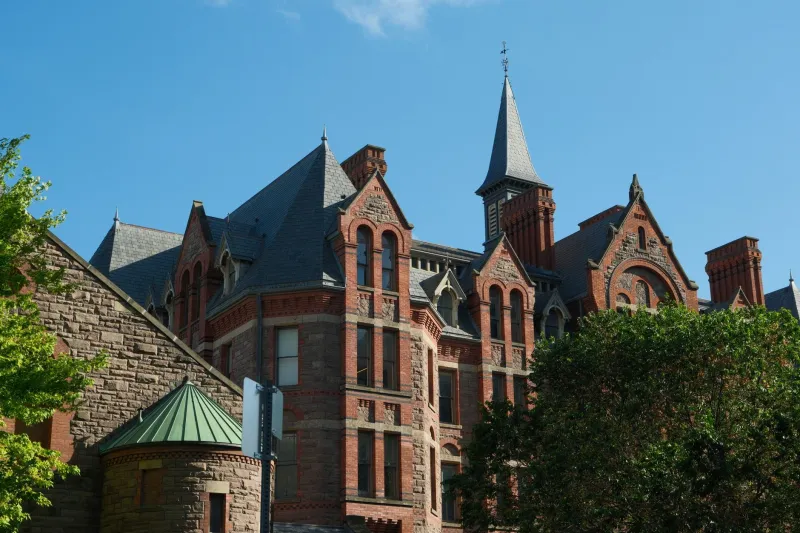
The practical effect is a neighbourhood where the Victorian and Edwardian architectural fabric — the very character that defines Deer Park's visual identity — is not merely preserved by sentiment, but protected by statute. Streets lined with century-old homes and mature tree canopies do not simply persist; they are, in a real sense, defended by policy.
This heritage framework also has an indirect effect on surrounding properties. When the low-rise streetscape adjacent to a mid-rise building like 1 Deer Park Crescent is subject to heritage protection, the likelihood of disruptive new construction in the immediate vicinity is substantially reduced. The result is a built environment that changes slowly and deliberately — a quality that discerning buyers increasingly recognise as a premium attribute.
Contrasting Trajectories: Deer Park Versus Toronto's Rapidly Transforming Cores
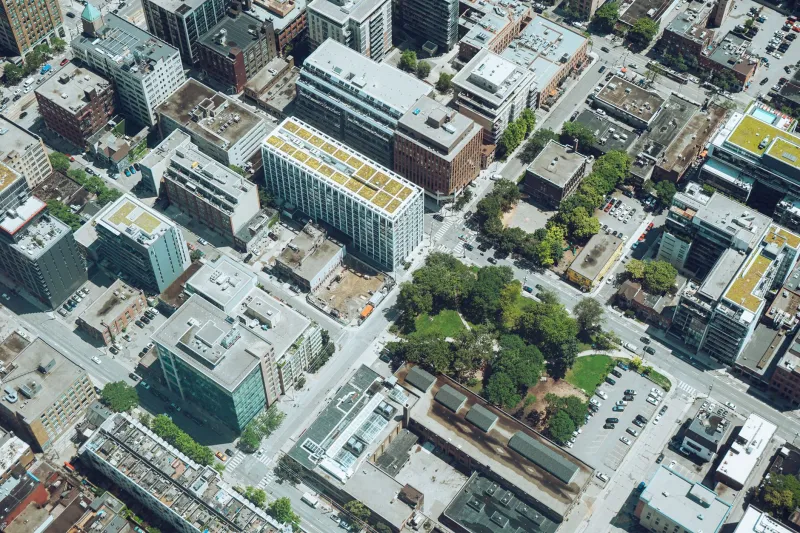
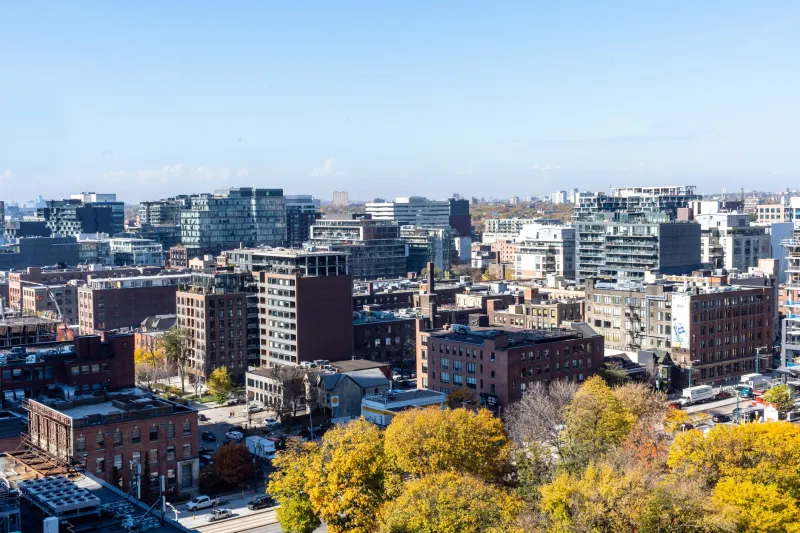
The contrast with other central Toronto neighbourhoods is instructive. In areas such as the Financial District's northern fringes, the corridor along Yonge Street south of Bloor, and portions of the former warehouse districts now being remade as mixed-use communities, the pace of change has been extraordinary. Buildings that were landmarks a decade ago now stand in the shadow of towers that did not exist when they were purchased. Noise, construction disruption, and the gradual shift in neighbourhood character from residential to high-density commercial-residential have all affected quality of life in ways that were not fully anticipated by buyers who entered those markets in earlier cycles.
Deer Park has not been immune to broader urban pressures, but its regulatory environment has acted as a meaningful buffer. Applications to build significantly beyond existing neighbourhood density have been challenged and, in many cases, reduced or refused at the Committee of Adjustment or Ontario Land Tribunal level. The neighbourhood's established residents, many of whom have deep roots here, have been consistent and effective advocates within the planning process — a civic capacity that is itself a form of neighbourhood resilience.
For buyers at 1 Deer Park Crescent, this track record offers a degree of confidence that is genuinely difficult to find elsewhere in the city. The building sits within a planning context that has demonstrated, over multiple development cycles, a capacity to resist the most disruptive forms of intensification.
What Stable Zoning Means for Long-Term Property Values
Real estate economists have long observed a relationship between neighbourhood predictability and property value performance. When buyers can form reasonable expectations about what a neighbourhood will look and feel like over time, they are willing to pay a premium for that certainty — and that premium tends to hold or appreciate as uncertainty increases elsewhere.
Deer Park's regulatory stability has contributed to a pattern of property value performance that stands apart from more volatile segments of the Toronto market. While condominiums in rapidly densifying corridors have experienced cycles of speculative inflation followed by correction, well-positioned suites in established midtown neighbourhoods have tended to appreciate more steadily and retain value more reliably through market fluctuations.
This is not to suggest that any property is without risk in a complex market. But for buyers who are approaching a purchase at 1 Deer Park Crescent as a long-term decision — whether as a primary residence or as a considered addition to a real estate portfolio — the zoning and heritage framework surrounding this address represents a form of structural protection that is genuinely meaningful.
The Informed Buyer's Advantage
Understanding the regulatory context of a property purchase is, in many respects, the mark of a sophisticated buyer. Price per square foot, building amenities, and suite finishes are all visible and easily compared. The planning framework that determines whether the neighbourhood around your building will remain largely as it is, or whether it will be substantially remade by forces outside your control, is less visible — but arguably more consequential over a ten or twenty-year horizon.
Deer Park's zoning and heritage protections are not marketing language. They are documented in the City of Toronto's Official Plan, in the records of the Committee of Adjustment, and in the Ontario Heritage Register. Buyers who take the time to review these instruments will find a neighbourhood that has been deliberately and consistently protected from the overdevelopment pressures that have reshaped less fortunate addresses across the city.
At 1 Deer Park Crescent, that protection is not merely a backdrop to the suite. It is part of what you are acquiring when you choose to make this address your own.