Connected Yet Removed: The Quiet Genius of Deer Park's Urban Position

Photo by Photo by Venrick Azcueta on Unsplash on Unsplash
There is a particular kind of exhaustion that accumulates in people who live too close to the centre of things. The ambient hum of arterial traffic, the compressed rhythms of high-density streets, the sense that the city never quite recedes—these are familiar conditions for those who have prioritised proximity above all else. Deer Park offers a different proposition entirely. Here, the city remains accessible, even intimate, but the neighbourhood itself maintains a composure that feels almost deliberate in its contrast to what lies just minutes away.
For residents of 1 Deer Park Crescent, Suite 803, this duality is not a marketing abstraction. It is a lived reality that shapes mornings, evenings, and everything in between.
The Geometry of Accessibility
Deer Park sits at a geographic sweet spot that few Toronto neighbourhoods can genuinely claim. Positioned between Yonge Street and Avenue Road, and anchored to the north by St. Clair Avenue West, the area enjoys immediate access to two of the city's most significant transit corridors without being subsumed by them.
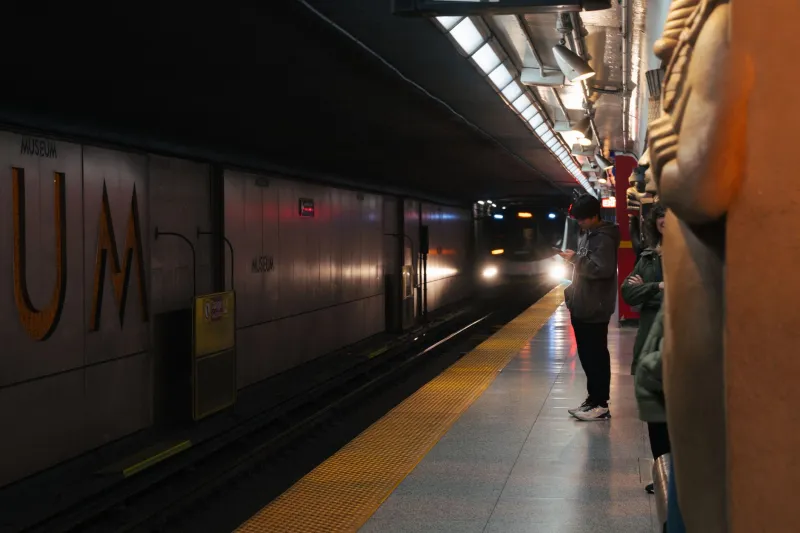
The Yonge-University subway line, one of the most heavily utilised rapid transit routes in Canada, places residents within minutes of Union Station, Bloor-Yonge interchange, and the broader downtown financial district. The St. Clair station, a short and pleasant walk from 1 Deer Park Crescent, connects commuters to the full length of the Yonge line with minimal friction. For professionals whose work demands regular presence in the core, this is not merely convenient—it is a meaningful reduction in the daily cost of urban life.
Yet step back from Yonge Street and the character of Deer Park asserts itself with surprising force. The crescent-shaped streets and mature tree canopy that define the neighbourhood's interior create a sensory buffer that distance alone cannot explain. There is an architectural and horticultural logic to how Deer Park unfolds that actively suppresses the noise and visual complexity of the city beyond its edges.
Commute Time as Quality of Life
It is worth considering what commute time actually represents in the lives of working professionals. The conventional wisdom holds that shorter is always better, but this calculation obscures an important variable: the quality of the journey itself.
A ten-minute walk through Deer Park's residential streets to the St. Clair subway station is a categorically different experience from a ten-minute walk through the congestion of King Street West or the pedestrian density of the downtown PATH network. Both may register identically on a map application, but only one arrives at the platform having already offered its traveller something resembling restoration.
From St. Clair station, the downtown financial core is typically reached within fifteen to twenty minutes, depending on one's precise destination. Midtown hubs such as Bloor-Yonge—home to the city's second major interchange and a dense cluster of professional offices, retail, and cultural institutions—are reachable in under ten minutes. By any objective measure, Deer Park residents are exceptionally well-served by the city's transit infrastructure.
What distinguishes this connectivity from that of, say, a condominium on Front Street or Bay Street is the return journey. The professional who commutes home to Deer Park does not simply trade one form of urban density for another. The neighbourhood actively participates in the process of decompression, offering quiet streets, considered architecture, and the kind of unhurried residential atmosphere that has made it one of Toronto's most consistently desirable addresses.
The Psychology of the Buffer Zone
Urban planners and environmental psychologists have long recognised that the relationship between a resident and their neighbourhood is not merely logistical—it is deeply psychological. The concept of restorative environments, developed by researchers Rachel and Stephen Kaplan in the 1980s, identifies natural settings and low-stimulation spaces as critical to cognitive recovery after sustained periods of directed attention.
Deer Park, with its established green corridors, its relative freedom from commercial signage and high-volume retail, and its prevalence of mature deciduous trees, functions as precisely this kind of restorative environment. The neighbourhood does not ask much of its residents in terms of navigational or sensory processing. It offers, instead, the particular relief of a place that has already arrived at itself—settled, coherent, and unhurried.
For the professional who spends significant portions of the working day in open-plan offices, on video calls, or navigating the compressed social demands of downtown life, this quality is not a luxury. It is a functional necessity. The home, and the neighbourhood surrounding it, must serve as genuine counterweight to the intensities of professional life.
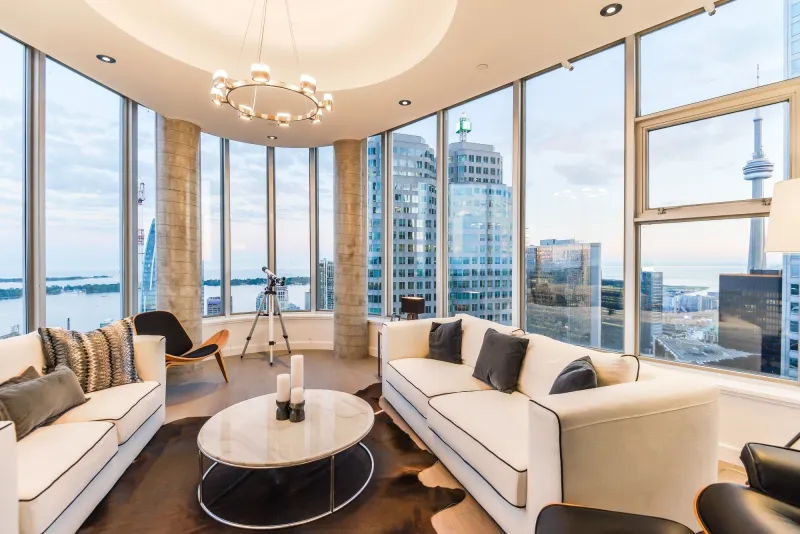
Suite 803 at 1 Deer Park Crescent is positioned to deliver precisely this counterweight. At the eighth floor, the unit sits above the ambient street-level noise while remaining grounded in the neighbourhood's residential fabric. The perspective from this elevation offers a view of the tree canopy rather than the traffic below—a distinction that, over time, registers not merely aesthetically but physiologically.
A Neighbourhood That Knows When to Recede
One of Deer Park's less frequently articulated virtues is its restraint. Unlike neighbourhoods that compete aggressively for the attention of their residents and visitors—through signage, commercial density, or the manufactured vitality of newly developed retail strips—Deer Park achieves its appeal through understatement. Its amenities are genuine rather than performative: independent restaurants, established grocery options, professional services, and cultural institutions that serve a community rather than market themselves to one.
This restraint is, paradoxically, what makes Deer Park so well-suited to the modern professional seeking both engagement and withdrawal. The neighbourhood can be animated or quiet depending entirely on what the resident requires of it. It does not impose itself.
The proximity to Forest Hill Village to the west and Rosedale to the east adds further dimension to this equation. Both neighbourhoods extend Deer Park's accessible geography without introducing the kind of commercial intensity that would compromise its essential character. Residents of 1 Deer Park Crescent find themselves at the centre of a residential ecosystem that rewards exploration while consistently offering a reason to return home.
The Case for Considered Proximity
The most sophisticated buyers in Toronto's current market are increasingly asking not merely how close a property is to the city's amenities, but how intelligently it is positioned relative to them. Distance, in this calculus, is less important than the quality of the relationship between a home and its surrounding urban environment.
Deer Park answers this question with a clarity that few Toronto neighbourhoods can match. It is close enough to matter and removed enough to restore. It connects its residents to the city's essential infrastructure while protecting them from the costs that proximity to that infrastructure so frequently imposes.
For those considering Suite 803 at 1 Deer Park Crescent, this is the essential proposition: a home that participates fully in Toronto's urban life while maintaining the composure of a neighbourhood that has always understood the value of knowing when to step back.
In a city that rarely pauses, that understanding is worth considerably more than square footage alone.