Measured Against the Market: How Deer Park Property Values Have Outpaced Toronto's Most Celebrated Addresses

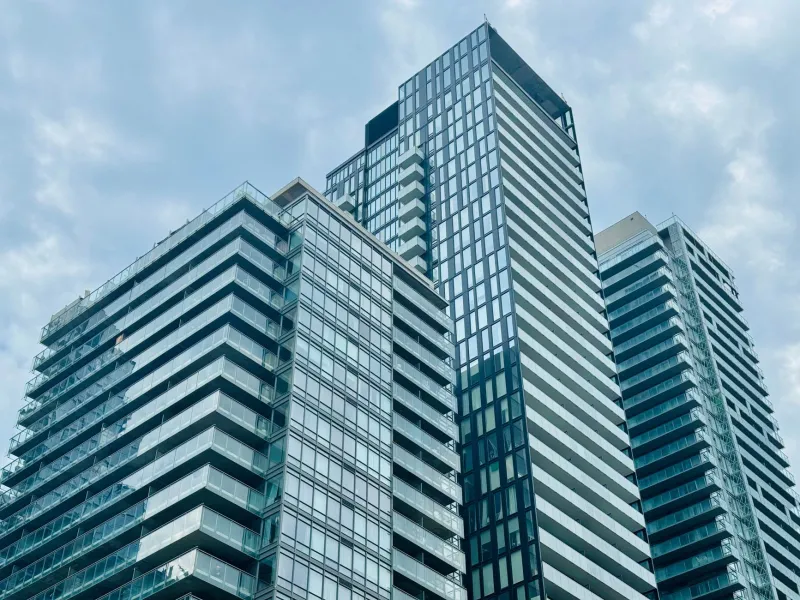
Photo by Photo by Lumière Rezaie on Unsplash on Unsplash
When discerning buyers evaluate long-term wealth-building potential, neighbourhood selection often matters more than any individual suite's finishes or floor plan. A careful examination of five-year and ten-year appreciation data across Deer Park, Yorkville, Forest Hill, and Rosedale reveals a story that surprises even seasoned Toronto real estate professionals. Understanding where 1 Deer Park Crescent sits within that broader picture is essential for any buyer approaching this market with serious intent.
Setting the Stage: Why Comparative Analysis Matters
Toronto's luxury residential market is frequently discussed as a monolith — a single, ascending tide that lifts all premium properties equally. The data, however, tells a considerably more nuanced story. Neighbourhoods that appear similarly prestigious on the surface have demonstrated meaningfully different appreciation trajectories depending on their building stock, transit proximity, demographic composition, and the degree to which they have remained insulated from speculative development pressure.
For buyers considering a suite at 1 Deer Park Crescent, the relevant comparison set includes Yorkville's high-rise condominium corridor, the detached and semi-detached markets of Forest Hill South, and the ravine-adjacent estates of Rosedale. Each of these addresses commands significant cachet. Yet their long-term performance figures diverge in ways that carry direct implications for a buyer's wealth-building strategy.
The Yorkville Comparison: Prestige at a Volatility Cost
Yorkville is perhaps Toronto's most internationally recognised luxury address. Its retail corridor, gallery density, and hotel presence create an atmosphere of concentrated urban glamour that attracts both domestic and foreign capital. Over the past decade, average condominium values in the Yorkville core have appreciated substantially — but the trajectory has been notably uneven.
High-rise towers completed between 2015 and 2020 experienced sharp initial appreciation followed by periods of price compression, particularly in the one-bedroom and investor-grade segments that dominate the building mix. The oversupply risk inherent to high-density condominium corridors has introduced a degree of volatility that longer-horizon buyers find difficult to model with confidence. When new towers deliver hundreds of units simultaneously into a finite rental and resale pool, price discovery becomes turbulent.
Deer Park's mid-rise building stock, by contrast, operates in a fundamentally different supply environment. The neighbourhood's established zoning framework and heritage character have historically constrained new development, meaning that existing units at addresses like 1 Deer Park Crescent do not compete against a perpetual pipeline of newly delivered inventory. Scarcity, in residential real estate, is not a marketing abstraction — it is the single most reliable driver of sustained appreciation.
Forest Hill: Strong Fundamentals, Different Asset Class
Forest Hill South presents a distinct comparison. Its detached home market has demonstrated exceptional ten-year appreciation, driven by elite school catchment areas, generous lot sizes, and a buyer profile that skews toward established families with multi-generational wealth. Over the past decade, Forest Hill South detached properties have seen average values climb considerably, reflecting both genuine demand and the structural scarcity of large residential lots within the city's most coveted school districts.
However, the Forest Hill market is not directly accessible to buyers seeking a premium condominium experience. The capital required to participate meaningfully in that detached market is substantially higher, the carrying costs are considerable, and the lifestyle proposition — ownership of a large property requiring active maintenance — is simply incompatible with what a significant portion of today's discerning buyers actually want.
This is where Deer Park's mid-rise condominium segment occupies a strategically advantageous position. A suite at 1 Deer Park Crescent offers exposure to the same neighbourhood quality indicators that underpin Forest Hill's premium valuation — mature tree canopy, proximity to ravine systems, a demographically stable and affluent surrounding community — without requiring the capital commitment or lifestyle trade-offs that detached ownership demands. For buyers who value genuine neighbourhood prestige alongside the convenience of purpose-built residential living, this represents a meaningful structural advantage.
Rosedale: The Closest Analogue, and What It Reveals
Of the neighbourhoods under examination, Rosedale perhaps offers the most instructive comparison for prospective buyers at 1 Deer Park Crescent. The two communities share a physical adjacency, a similar heritage character, and a comparable insulation from mass-market development. Rosedale's property values — across both its detached and attached segments — have demonstrated exceptional stability through multiple market cycles, with appreciation that, while not always the most dramatic on a percentage basis, has proven remarkably consistent.
The lesson embedded in Rosedale's long-term performance data is one that sophisticated buyers understand instinctively: consistency compounds. A property that appreciates at a measured but reliable rate over ten years, without the sharp corrections that periodically affect oversupplied condominium corridors, ultimately delivers superior risk-adjusted returns. Deer Park's proximity to Rosedale — and the degree to which the two neighbourhoods share overlapping fundamentals — suggests that buyers at 1 Deer Park Crescent are accessing a comparable appreciation profile at a point in the market cycle where relative value remains compelling.
Mid-Rise Buildings as a Distinct Investment Category
Perhaps the most underappreciated finding to emerge from a careful review of Toronto's premium residential data is the consistent outperformance of established mid-rise buildings relative to their high-rise counterparts over longer time horizons. This pattern holds across multiple neighbourhoods and market cycles, and its causes are well understood.
Mid-rise buildings in mature neighbourhoods benefit from a combination of factors that high-rise towers in development corridors simply cannot replicate: a fixed and finite unit count, a stable and often owner-occupied resident base, superior construction quality relative to the cost-optimised standards that govern large-scale condominium development, and an absence of the amenity-inflation arms race that has saddled many newer towers with elevated maintenance fees. When buyers at 1 Deer Park Crescent assess their long-term cost of ownership, the fee structure of an established mid-rise building frequently compares favourably to that of a nominally similar suite in a newer high-rise.
What the Trajectory Suggests for Buyers Today
The cumulative picture that emerges from this comparative analysis is one of structural advantage. Deer Park's combination of constrained supply, neighbourhood prestige, transit connectivity, and established mid-rise building stock positions a suite at 1 Deer Park Crescent within a segment of the Toronto market that has historically rewarded patient, long-horizon buyers with returns that are both meaningful and consistent.
For buyers who approach this purchase as a wealth-building decision rather than a lifestyle acquisition alone, the neighbourhood's appreciation trajectory relative to Yorkville, Forest Hill, and Rosedale offers a compelling case. The data does not suggest that Deer Park will outperform every alternative in every market condition. What it does suggest, with considerable historical support, is that the fundamentals underpinning value at this address are durable in ways that matter most when the broader market experiences the inevitable periods of correction and recalibration that characterise any long-term investment horizon.
In a city where premium addresses are numerous but genuine value is finite, that distinction is worth examining carefully.